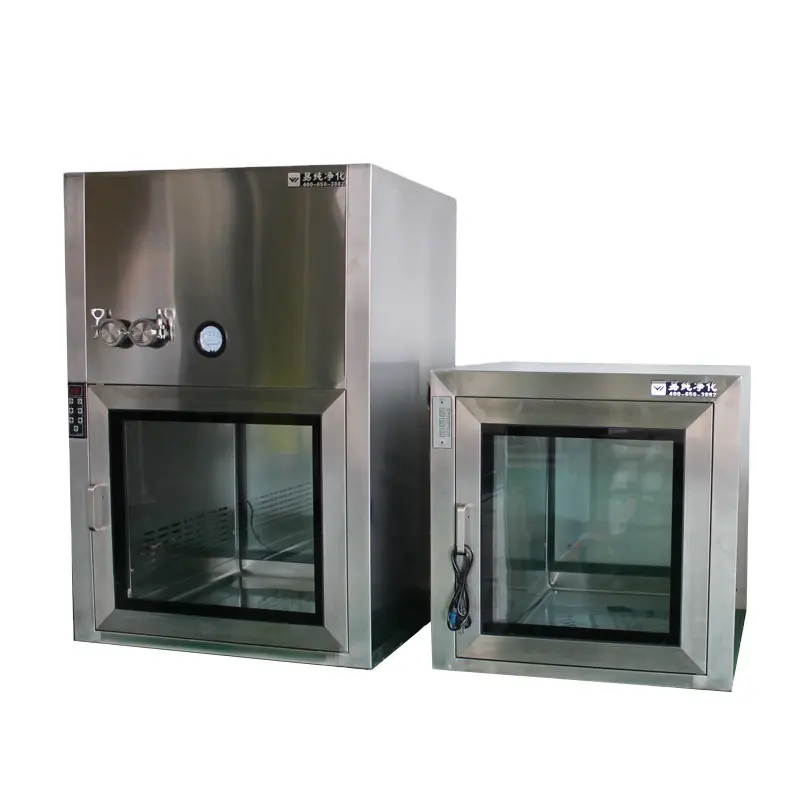
Pass Box
The cleanroom window is a specialized component designed to connect the cleanroom and non-clean areas, ensuring the containment of particles, microorganisms, and contaminants. Its key features include:
Aseptic Performance: The cleanroom window is equipped with a sealing design to effectively prevent the entry and exit of particles, microorganisms, and pollutants, maintaining the aseptic environment within the cleanroom.
Sealed Design: Utilizing high-performance sealing strips and air-tight design, it minimizes air leakage, further enhancing the aseptic performance of the cleanroom.
Resistant Materials: Typically made of 304 or 316L grade stainless steel, which are food-grade or medical-grade materials, offering excellent resistance to corrosion and biological corrosion, suitable for high-purity environments such as food, pharmaceutical, and electronic manufacturing.
Compact and Easy to Install: The design is compact, lightweight, and easy to install and maintain, without compromising the structural integrity or aesthetic appeal of the cleanroom.
Efficient Control of Contaminants: Through precise design and material selection, it effectively controls the transmission of external pollutants and internal particulates, ideal for high-requirement environments like cleanroom rooms, laboratories, and medical facilities.
The cleanroom window is widely applied in the following fields:
Semiconductor Manufacturing: Used in high-purity semiconductor processing and component production.
Biopharmaceuticals: Utilized in cell culture and gene editing experiments requiring aseptic conditions.
Food Production: Applied in high-purity food additives production or storage.
Medical Devices: Used in aseptic conditions for medical equipment connection and cleaning in surgical suites.
By employing advanced materials and manufacturing techniques, the cleanroom window enhances the quality of the working environment in cleanrooms, ensuring the safety and reliability of products.